
Burien Directory Years on Shelf
The Washington State Library holdings list is the clearest catalog of printed Burien city directory material. It identifies three Burien runs and a later Seattle Suburban South series that covers Burien-area labels. These are reference holdings, not a promise of a searchable full-text website. Ask the library to confirm the exact volume, shelf access, copying rules, and any loan option before a trip.
| Collection | Years | Where Held | Access |
|---|---|---|---|
| Burien directories | 1962–63; 1967–68; 1970–75 | Washington State Library | Physical reference; confirm volume and copying access |
| Seattle Suburban South | 1976–83; 1985; 1987; 1991 | Washington State Library | Physical reference; includes Burien-area labels |
| Highline Times microfilm | July–December 1968 verified | King County Library System | Reader and scanner; full run not verified |
| Northwest Collection | Regional and historical | Burien Library | Books, clippings, maps, microform, and media |
| Highline Heritage collections | No single date run | Highline Heritage Museum | Online finding aids; research by appointment |
A catalog record names R.L. Polk & Co. as publisher of the 1982 South King County Area Directory. The official holdings page does not identify the publisher for every year, so inspect each title page before assigning a publisher to the full run. No official source confirmed a Burien-specific reverse-directory run or the precise final printed year. Those gaps should stay visible in the research notes instead of being filled by assumption.
The dated shelf also reveals where a search must change formats. The Burien-titled volumes end before the last Seattle Suburban South entries, so a surname search should continue across both series. Record the title exactly. Ask whether the volume has an alphabetical section, a street-order section, or both, since the official catalog does not confirm that feature for each year. If a listed year is missing on the day of a visit, request staff help rather than treating the absence as proof that the household was not listed. Physical reference collections can be unavailable for handling, scanning, or repair even when the catalog still describes them.
Burien Directory Labels Shift
The later shelf is filed as Seattle Suburban South, not simply as Burien city directories. White Center appears in the holdings context, and Seahurst occurs in the suburban series. A family may also be tied to Highline, North Burien, Old Burien, Manhattan, Woodside Park, or another local label. Keep the wording printed in the source and search several labels rather than translating all of them into today's city name.
This matters because Burien incorporated in 1993. Manhattan and Woodside Park were annexed in 1998, and the southern North Highline and Boulevard Park annexation took effect in 2010. The same address can be part of modern Burien while an older directory or census describes it as an unincorporated community. Publication geography and legal city limits answer different questions.
Note: Record both the directory label and current jurisdiction so later readers can understand why the same address appears under two place names.
Read Burien Directories Locally
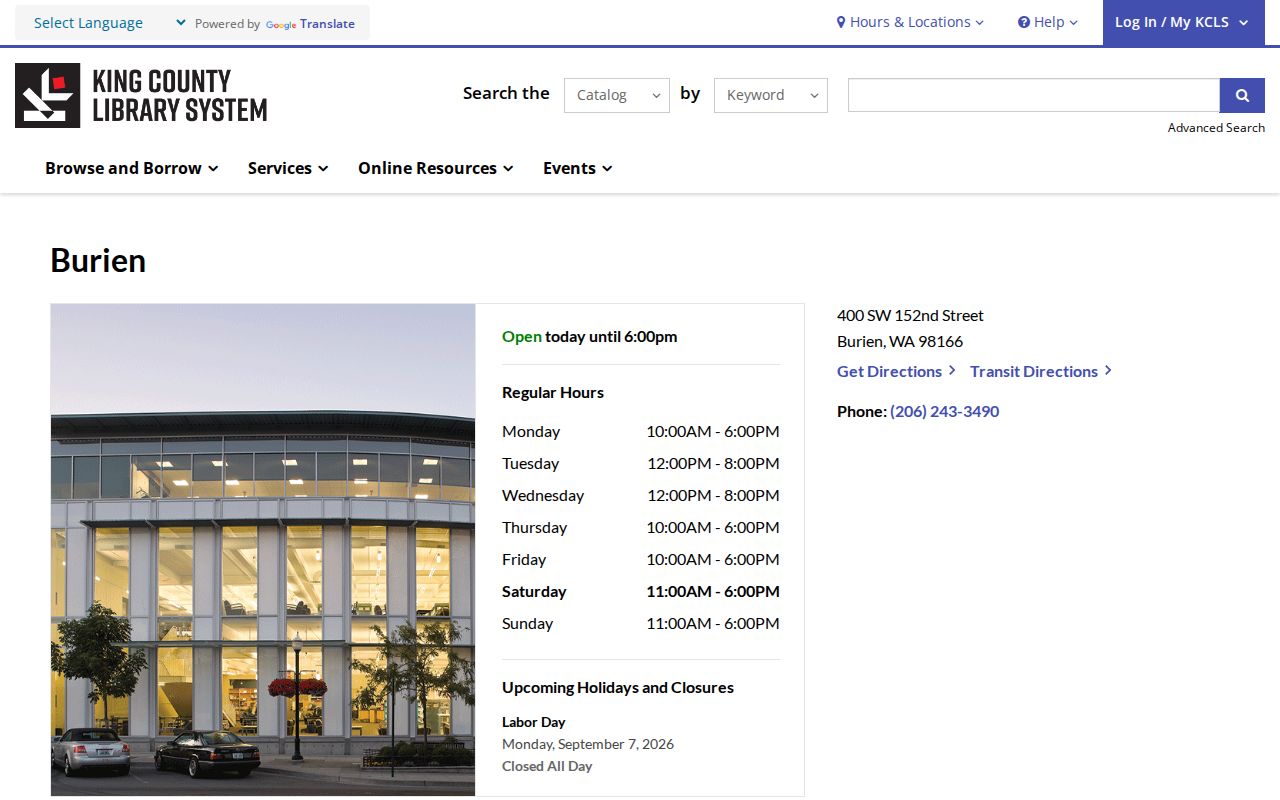
Burien Library at 400 SW 152nd Street provides a practical local work station. Its Northwest Collection includes regional books, clipping files, maps, periodicals, microform, and audiovisual material. The building also has a microfilm and microfiche reader, scanner, copier, printer, and public computers. Call 206-243-3490 and check current hours before visiting.
The KCLS genealogy services route includes city directories, old newspapers, vital records, county histories, and Family History Library microfilm. When Burien's local shelf lacks a title, the South King County Genealogical Society collection at Auburn offers more than 12,000 items and scheduled volunteer help. Library access is especially useful for moving from one short directory line to a newspaper notice or regional map.
Bring a compact list of names, spelling variants, addresses, and target years. Start with the directory citation, then use the microfilm reader to search the same month or year in local news. KCLS confirms only July through December 1968 for the Highline Times on its public microfilm listing, so ask staff about any date outside that range. The Northwest Collection can also explain a road name, subdivision, or community label that does not appear on a modern map. When a licensed database asks for a library card, confirm current access with KCLS because subscriptions and branch availability can change.
The Burien Library page shown here is the source for local access and equipment details.
Read a Burien Directory Entry
A city directory entry is a snapshot for one publication date. Transcribe it exactly, including initials, street spelling, page, year, and any symbols. A Burien volume may contain the name, an address, a phone number, a spouse or relative, an occupation or business line, and an owner or renter mark. No official sample page was viewable during the research, so the physical volume's own key must govern every abbreviation.
| Name | Surname, given name, and initials exactly as printed |
|---|---|
| Household notation | Spouse, relative, widow, or deceased note when the volume includes one |
| Address | Street number, street name, and publication label |
| Phone or work line | Telephone, occupation, employer, or business when printed |
| Citation | Volume title, year, publisher, page, and repository |
- Criss-cross directory
- A later directory format arranged by street address or phone number instead of only by surname.
- Householder index
- A list centered on the principal person named for a household, with coverage that varies by publisher.
- Abbreviation key
- The volume's legend for shortened terms and symbols. Read it before interpreting any entry.
An entry links a person to an address on that date. It does not prove title ownership or continuous residence. Initials, misspellings, delayed updates, and married-name forms are common reasons a name seems to vanish. Search the surname, spouse, address, and the years on either side.
Burien People Beyond the Listing
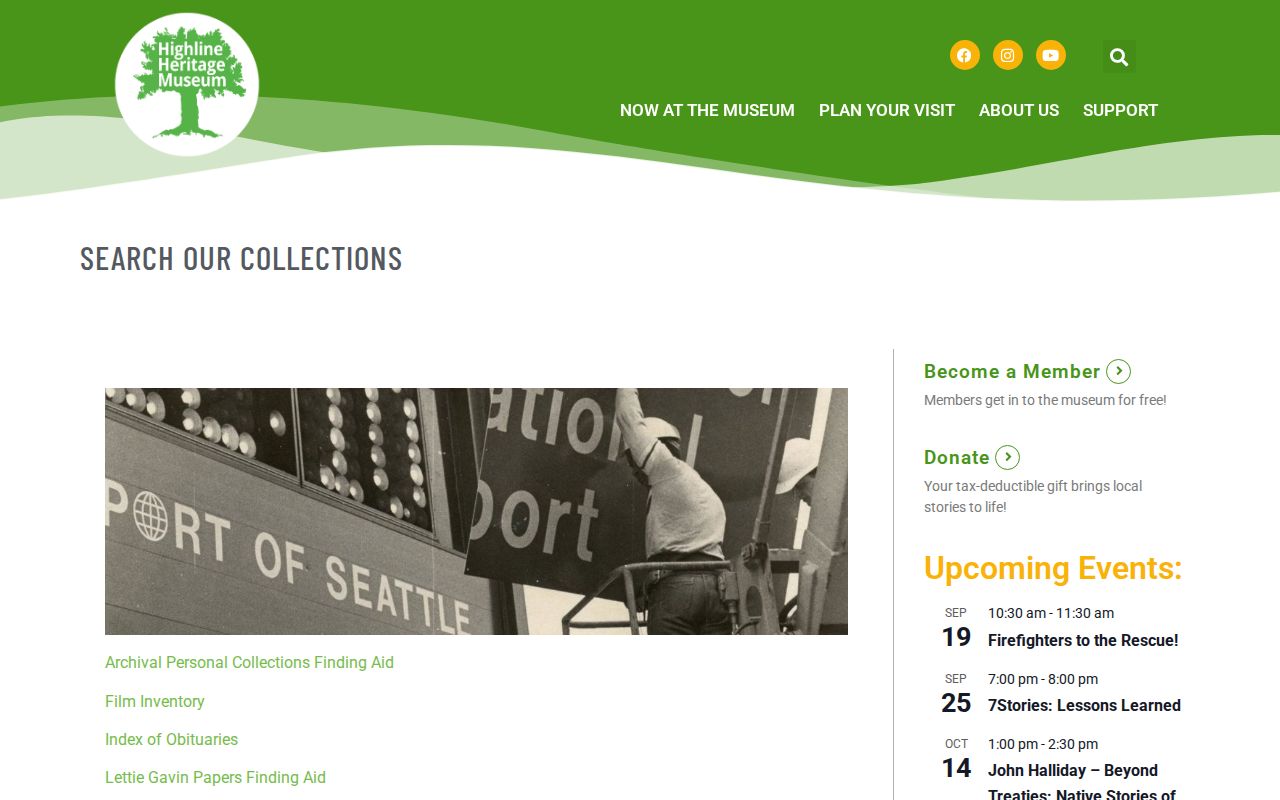
The Highline Heritage Museum collection search adds context that a short city directory line cannot supply. Its finding aids cover personal papers, obituaries, photographs, oral histories, newspapers, Highline Times material, school yearbooks, families, roads, homes, and community groups. Research collections are available Friday by appointment at 819 SW 152nd Street; the museum lists 206-402-4029.
Begin with a name, old address, approximate year, and desired record type. A school image may separate two people with the same name, while an obituary can connect relatives and later locations. Museum material is historical evidence, not a current resident roll, and any claim about ownership or a legal event still needs the relevant official record.
The museum's finding-aid page shows the range of local collections available for a focused request.
Names That Unlock Burien History
Old place names can be as useful as surnames. Sunnydale history ties the name Burien to Gottlieb von Boorian's 1884 homestead southeast of Lake Burien. Gregory Heights was once described as Wobbly Hill or Poverty Hill in local accounts tied to the First World War shipbuilding era. Those terms are search leads for old newspapers, clippings, photographs, and directory labels.
Search each historic name as printed, then note the source and date. A colorful neighborhood account should not be treated as a deed fact. It can, however, point toward the right newspaper issue, map, or household entry. That is the strength of the Burien city directory shelf: sparse lines become useful when joined to precise local labels.
Extend Burien Directory Research
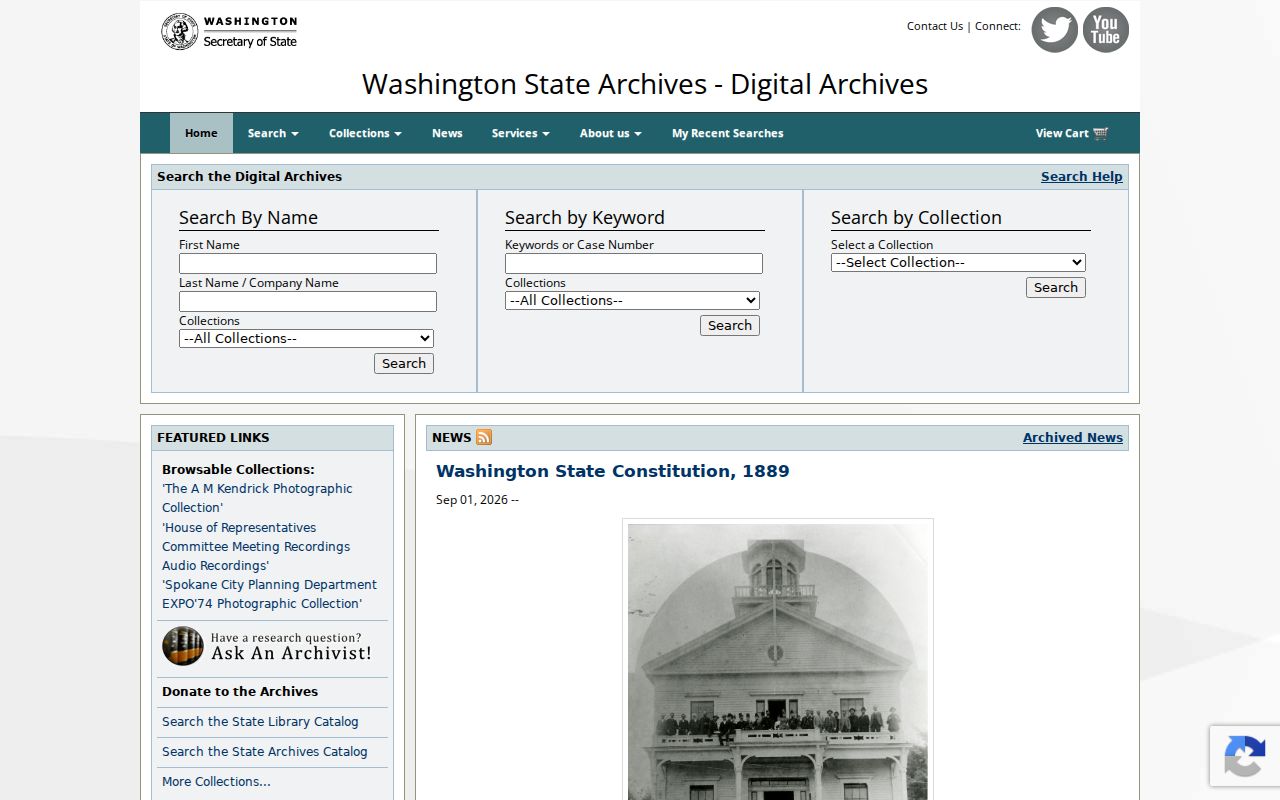
The Washington State Archives Digital Archives can extend a directory trail through indexed marriage, birth, death, and naturalization collections. King County naturalization records cover 1906 through 1920 and contain 6,252 records. The county marriage collection spans 1855 through 2017, while image access varies by collection.
King County probate records at FamilySearch provide 33,530 browsable images dated 1854 through 1927. Account and image limits may apply. A probate file can connect a deceased person, heirs, addresses, and property, though family details may be incomplete. The broad FamilySearch city-directory collection does not guarantee that each Burien volume is digitized.
Search the archive by collection when a general name query returns too much. The naturalization index offers last, first, and middle names, Soundex, and a year range. Soundex groups names by pronunciation and can help with spelling shifts, but every match still needs inspection. Marriage, birth, and death indexes have their own coverage years and access rules. Save the record title and collection link with the result. A digital index entry is a pointer to evidence; it is not a substitute for a certified copy when an official document is required.
The Digital Archives search screen supports name variants and collection browsing.
Trace Families Through Burien Directories
Build a dated chain, not a single search result. The Burien city directory years can bridge the long gaps between released federal censuses. Census schedules show household order and relationships; a directory shows an address association near its publication date. A deed shows a title transfer, while a property card identifies the parcel and tax history. Keep those roles separate.
- Start in the nearest listed year and copy the name, address, page, and exact place label.
- Move through adjacent Burien and Seattle Suburban South volumes, recording changes and missing years.
- Inspect any street-order section to compare the address and nearby listings.
- Pair the dates with released federal census schedules, deeds, and King County property cards.
- Use Highline Times microfilm, the museum obituary index, or probate images to explain the end of a trail.
A missing listing does not by itself mean that a person moved or died. The household may be unlisted, spelled differently, outside the publisher's coverage, or filed under another neighborhood. For modern address-keyed work, the Burien street directory explains the county parcel route. For an older household, search the newspaper and obituary layer before deciding why the name disappeared.
Note: Cite every volume by title, year, page, and repository; that makes a later correction possible when two residents share a name.